


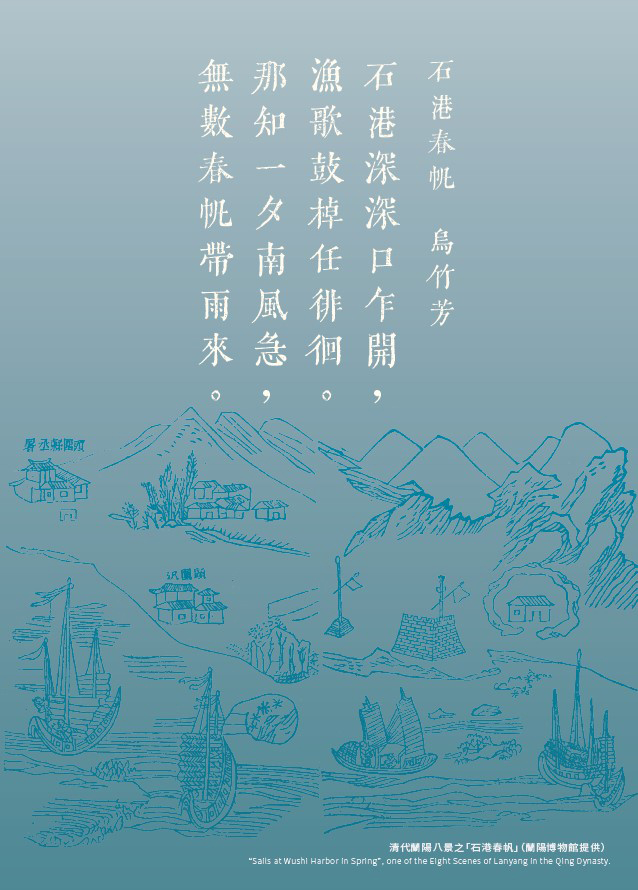
“Sails at Wushi Harbor in Spring”, one of the Eight Scenes of Lanyang in the Qing Dynasty.
1812年噶瑪蘭設廳,人口日眾,物貨暢流。烏石港不僅是沿岸貨運港,與中國大陸東南省分亦有頻繁的商貿往來。1826年,烏石港與鹿耳門、鹿港、八里坌、海豐港並列為清代臺灣五大正口。
In 1812, the Kavalan Subprefecture was established, leading to a growing population and smooth goods transports. Wushi Harbor was not only a coastal freight port but also maintained frequent commercial trade with the southeastern provinces of mainland China. In 1826, Wushi Harbor was officially ranked alongside Lu'ermen, Lukang, Baliben, and Haifeng Harbor as one of the five major “Official Ports” of Taiwan during the Qing Dynasty.
1878年山洪暴發使得烏石港河道淤塞,改由南邊的打馬煙(竹安)出海,改稱「頭圍港」,烏石港逐漸成為封閉水域。1924年8月福德坑溪山洪爆發,頭圍港淤塞;12月1日宜蘭線鐵道(八堵-蘇澳)通車,陸運興起,宜蘭的水運時代走入歷史。
In 1878, a flash flood caused the Wushi Harbor channel to silt up. The river outlet moved south to Damayan (Zhuan) and was renamed “Touwei Port”, while Wushi Harbor gradually transformed into a landlocked body of water. In August 1924, a flash flood in Fudekeng Creek caused the siltation of Touwei Port. On December 1 of the same year, the Yilan Railway Line (Badu–Su’ao) opened to traffic, marking the rise of land transport and the official end of Yilan's waterway era.
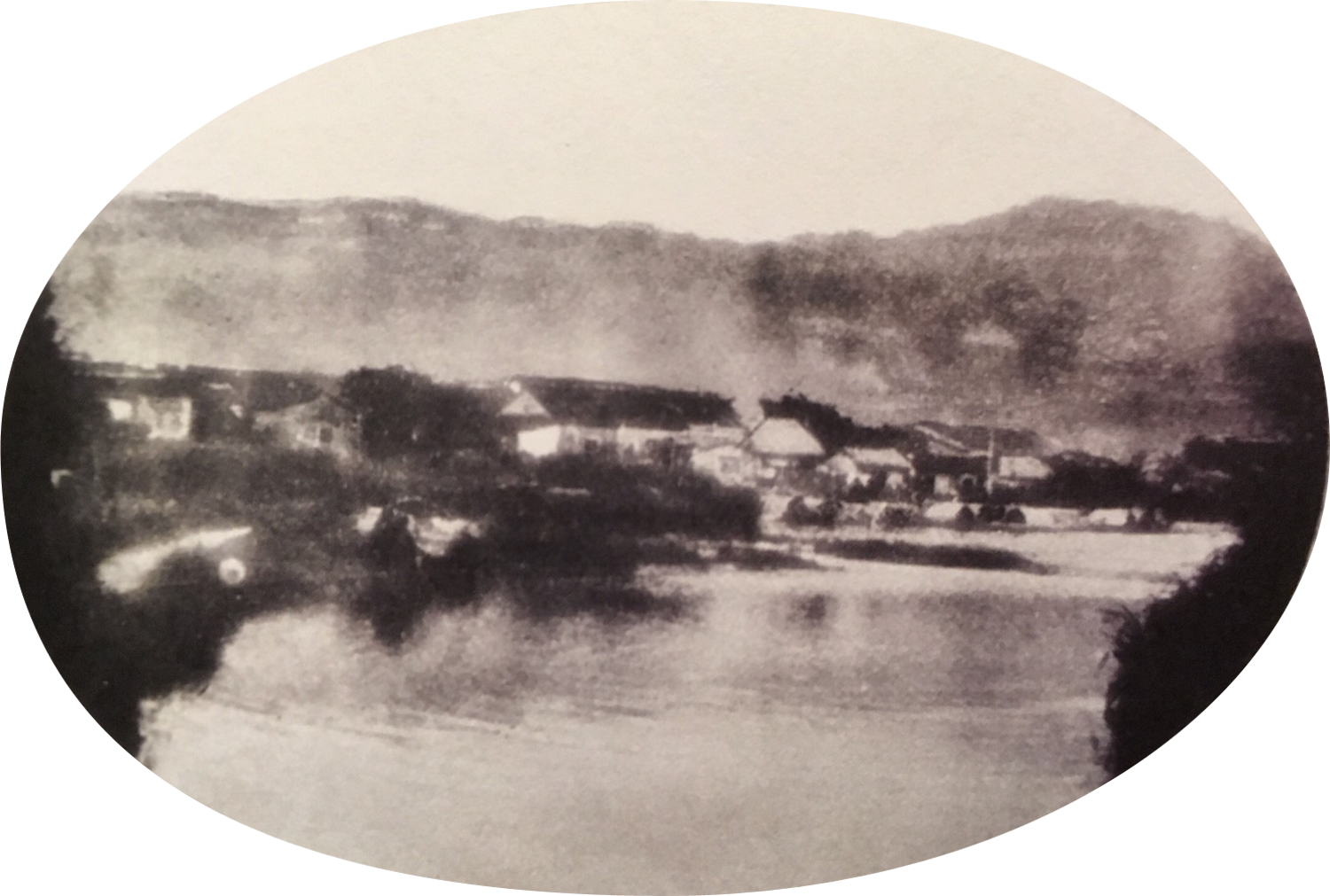
The Photograph of Touwei Port in Japanese Rule Period.